Butcher's Broom in a Brain Capsule: What a Circulation Herb Is Doing Here
Third on the Harmo Brain label is an herb better known to vein clinics than to anyone reading about focus. Here is what butcher’s broom is, where its evidence sits, and how to read its place in the formula.
- Third in the blend. Butcher’s broom root extract, after magnesium glycinate and alpha lipoic acid.
- Its trials are in leg veins. Chronic venous insufficiency, not memory or attention.
- It constricts veins. An alpha-adrenergic action, which is why blood-pressure treatment is worth mentioning.
- It is the circulatory half. The supplier calls the product a mitochondrial and circulatory formula.
- Twelve weeks. The placebo-controlled vein trial measured change at eight and twelve weeks, a reminder to judge any daily capsule over weeks.
Third on the label
The Harmo Brain blend lists “Butcher’s Broom (Ruscus aculeatus) Root Extract” third of six. The labelling rule ranks the blend’s other ingredients by weight, so it weighs less than alpha lipoic acid and more than L-carnitine, turmeric extract and CoQ10. The magnesium glycinate above it is a separate case: its 80 mg of magnesium makes it most of the blend.
The supplier describes the product as a mitochondrial and circulatory formula. Alpha lipoic acid, L-carnitine and CoQ10 make up the mitochondrial side. Butcher’s broom is the only material on the label that belongs to the circulatory side.
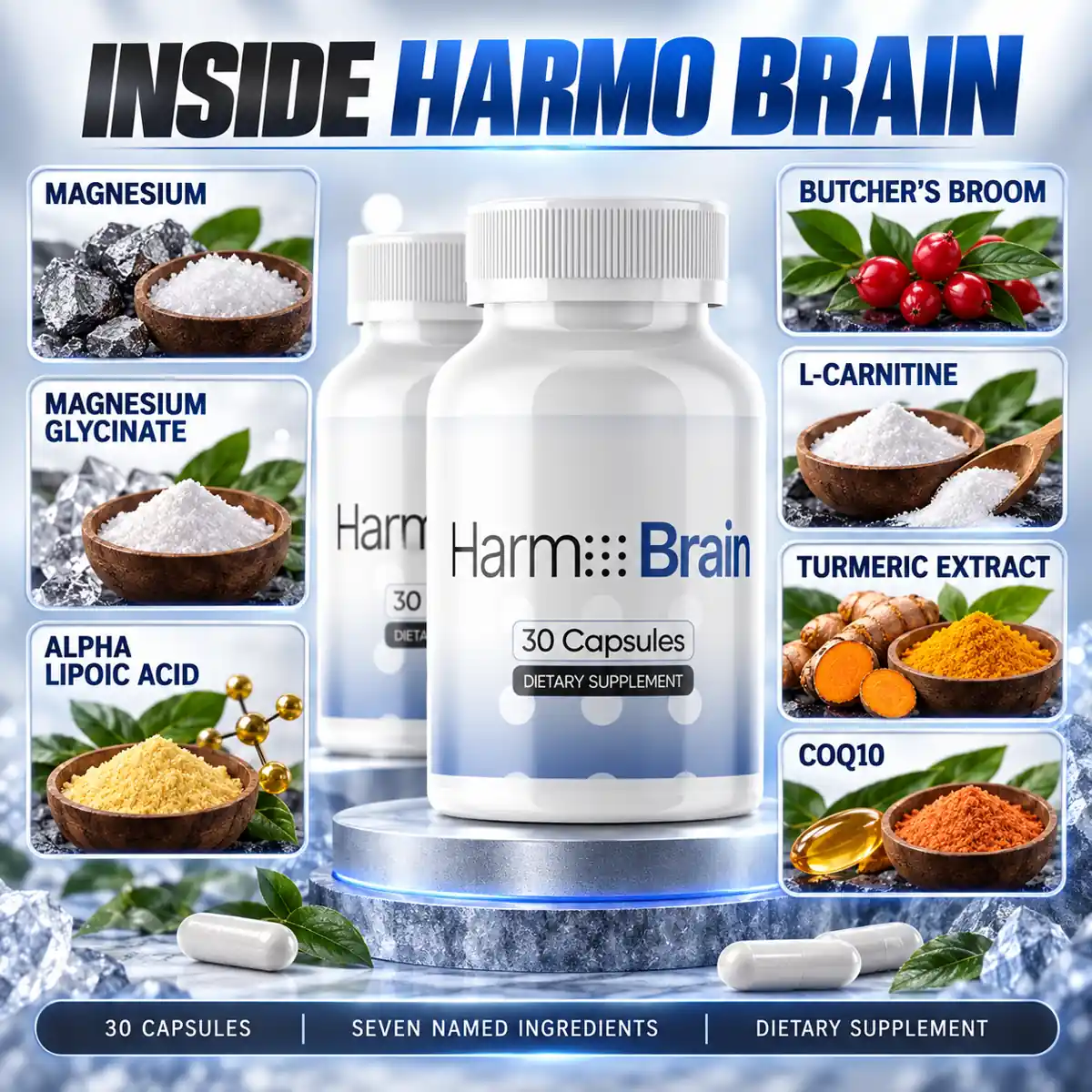
What butcher’s broom is
Ruscus aculeatus is a low evergreen shrub of Mediterranean woodland. Its rhizome, the underground stem, is the part used in herbal medicine. The European Medicines Agency files Rusci rhizoma among herbal medicinal products for circulatory disorders.
That filing matters for one reason: it tells you where the herb’s established use lies. It is a vein herb, and its research follows that use closely. Reviews credit its effects to plant compounds called ruscogenins, together with flavonoids.
Where the evidence sits: leg veins
| Source | Who took part | What was used | How long |
|---|---|---|---|
| Vanscheidt 2002 | 166 women with chronic venous insufficiency | Ruscus extract against placebo | 12 weeks |
| Boyle 2003 | 10,246 subjects across trials of chronic venous insufficiency | Cyclo 3 Fort, with 150 mg of Ruscus root extract per capsule | Meta-analysis |
| EMA | Not a trial | Rusci rhizoma, filed for circulatory disorders | Not applicable |
| Redman 2000 | A review with a case report | Ruscus proposed for low blood pressure on standing | Not applicable |
Every source concerns veins or blood pressure. This desk has found no study of butcher’s broom for memory, attention or focus.
Read the table for its populations. The placebo-controlled trial was run in women with chronic venous insufficiency; the meta-analysis pooled trials of a combination product in the same condition. Both are about legs.
What the vein trials measured
The 2002 trial (Vanscheidt 2002) analysed 148 women aged 30 to 89 who had lived with venous insufficiency for about 15 years on average. Its main measure was lower-leg volume over 12 weeks. Against placebo, leg volume fell by about 16.5 ml at eight weeks and 20.5 ml at twelve, ankle and leg circumference fell, and heavy, tired legs improved. Tolerability was rated good: of 48 adverse events across both groups, 22 were in the Ruscus group, and the one event linked to the extract at all was rated unlikely to be related.
The meta-analysis (Boyle 2003) pooled 20 placebo-controlled trials, five against another drug and six single-arm studies of Cyclo 3 Fort, a capsule combining 150 mg of Ruscus root extract with 150 mg of hesperidin methyl chalcone and 100 mg of vitamin C. On a 0 to 3 symptom scale it eased heaviness by about half a point, and pain, cramps and tingling by smaller margins, compared with placebo.
Those are real, measured effects, and every one of them is in the legs.
Harmo Brain, on the official website
One capsule a day, 30 to a bottle: 80 mg of magnesium as glycinate inside a 575 mg blend of six named materials. Packs of 2, 3 or 6 are priced at checkout, with 60 days from purchase to change your mind.
Order Harmo BrainThe circulatory half of the formula
Why put a vein herb in a focus capsule? The supplier’s framing answers it in one word: circulatory. The brain depends on a steady blood supply, and a formula built around energy and circulation reaches for an ingredient with a circulation pedigree.
That reasoning is plausible, and it is also as far as the evidence goes. No study linking butcher’s broom to blood flow in the brain, or to focus, has been found by this desk, so every page here describes it as a vein herb and nothing more. Harmo Brain as a whole is made to support focus, memory and mental clarity; this ingredient’s own research is in the legs.
The mitochondrial half, for contrast
The other side of the formula is easier to connect to energy. Three of the six materials work inside mitochondria, the parts of each cell that turn food into usable energy:
- Alpha lipoic acid, a cofactor of the mitochondrial enzymes that turn fuel into energy, listed second.
- L-carnitine, which carries fatty acids into mitochondria to be burned, listed fourth.
- Coenzyme Q10, part of the mitochondrial electron transport chain, listed last.
Put together, the label reads as energy inside the cell plus tone in the veins, with magnesium glycinate as the largest part by weight. The ingredients page gives each material its own card, with what published studies used beside what the label prints.
How it acts: the alpha-adrenergic angle
Butcher’s broom acts on alpha-adrenergic receptors in the wall of the vein, the same family of receptors that narrow blood vessels. A 2000 review described it as an agonist at alpha-1 and alpha-2 receptors that constricts veins, reduces pooling of blood in the legs and has a long record of use in Europe for circulatory disorders. On that basis it proposed the herb as a possible treatment for orthostatic hypotension, the drop in blood pressure some people feel on standing (Redman 2000).
That is the useful fact for a buyer. An herb with that action is worth mentioning to anyone who treats your blood pressure, whether it runs high or low.
How much fits in the blend
The label prints no separate amount for butcher’s broom. What it does print lets you bound it: 80 mg of magnesium as glycinate takes about 568 mg of a fully reacted grade, leaving about 7 mg of the 575 mg for five materials together. A buffered grade would leave more.
For scale, each capsule of the combination product in the venous insufficiency meta-analysis carried 150 mg of Ruscus root extract. The article what a 575 mg blend can hold works the arithmetic through in full.
Twelve weeks, again
One detail from the vein research carries over to how any daily capsule should be judged. The placebo-controlled trial measured change at eight and twelve weeks, not after a few days, and the effects it found were built up over that time.
The same patience applies to Harmo Brain as a whole. Most of this desk’s buyers who report a change put it at three to six weeks, and the guarantee runs 60 days from purchase. The results timeline sets out what to expect week by week, and the pricing page shows which packs cover a trial of that length.
Who should ask first
- Anyone treated for high or low blood pressure.
- Anyone with a circulatory condition already under care.
- Anyone on a medicine that acts on the autonomic nervous system, the system that controls blood-vessel tone.
- Anyone under 18, pregnant or nursing, whom the label excludes outright.
The safety page lists the interactions for all six materials, and the who it is for page sets out who the label includes.
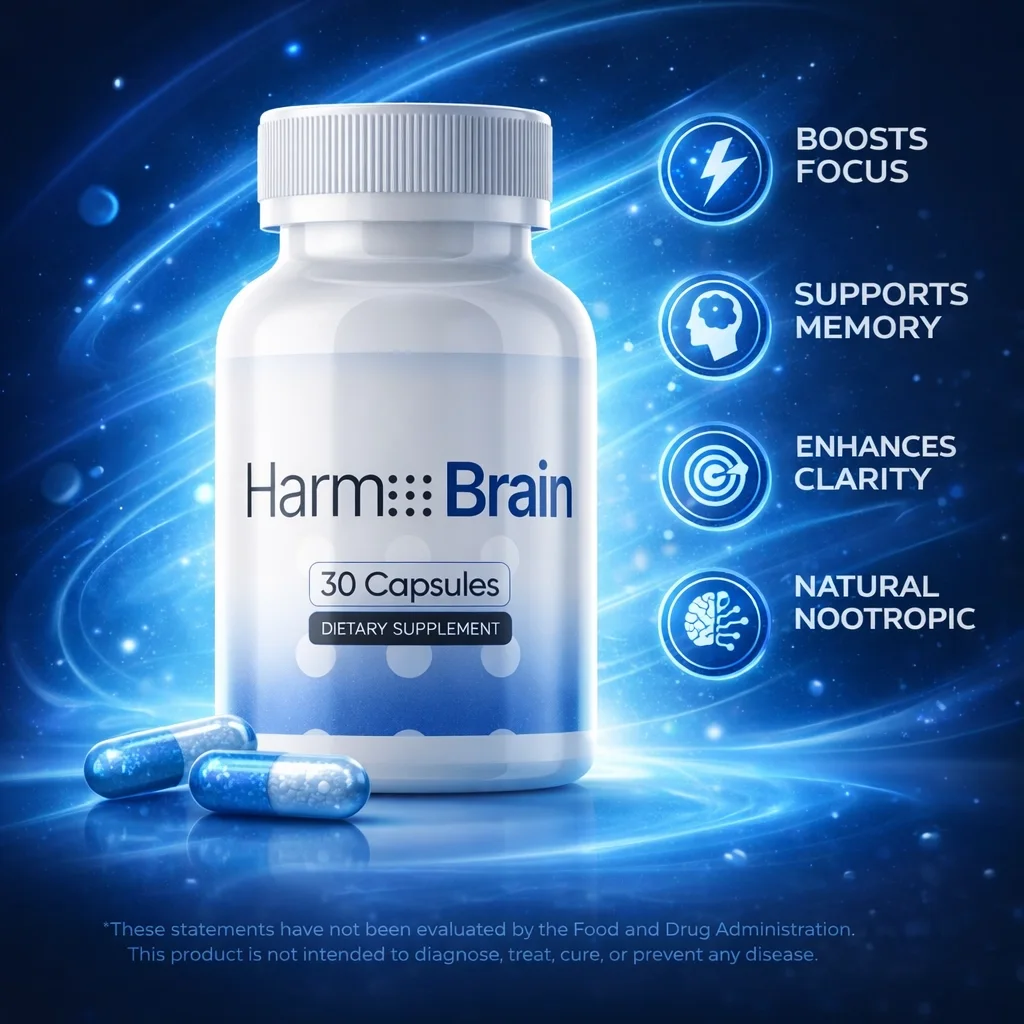
Reading a circulation claim on a focus label
- Ask which blood vessels were studied: legs, heart or brain.
- Ask who took part: people with a diagnosis, or healthy adults.
- Ask what product and dose were used, and whether it resembles this one.
- Ask whether the herb was given alone or in a combination, as it was in Cyclo 3 Fort, where two other ingredients shared the capsule.
- Remember that NCCIH finds direct evidence that supplements prevent dementia lacking, whatever their ingredients.
Asked of butcher’s broom, those questions give clear answers: legs, people with venous insufficiency, a combination product. That clarity is useful. It tells you exactly what the ingredient is known for, and lets you judge Harmo Brain on the routine it offers rather than on a borrowed claim.
A note on what this is. Harmo Brain is a dietary supplement, not a medicine. Nothing in this article describes it as a treatment for dementia, Alzheimer’s disease, mild cognitive impairment or any other condition, and no vitamin or supplement is recommended for preventing cognitive decline. A change in memory or thinking that worries you is a reason to be assessed by a clinician, not a reason to start a capsule.
Sources cited in this article
- Vanscheidt W, Jost V, Wolna P, et al. Efficacy and safety of a Butcher's broom preparation (Ruscus aculeatus L. extract) compared to placebo in patients suffering from chronic venous insufficiency. Arzneimittelforschung. 2002;52(4):243-50. PMID 12040966. pubmed.ncbi.nlm.nih.gov
- Boyle P, Diehm C, Robertson C. Meta-analysis of clinical trials of Cyclo 3 Fort in the treatment of chronic venous insufficiency. Int Angiol. 2003;22(3):250-62. PMID 14612852. pubmed.ncbi.nlm.nih.gov
- Redman DA. Ruscus aculeatus (butcher's broom) as a potential treatment for orthostatic hypotension, with a case report. J Altern Complement Med. 2000;6(6):539-49. PMID 11152059. pubmed.ncbi.nlm.nih.gov
- European Medicines Agency. Rusci rhizoma (butcher's broom): herbal medicinal product, therapeutic area circulatory disorders. www.ema.europa.eu
- National Center for Complementary and Integrative Health. 7 Things To Know About Dietary Supplements for Cognitive Function, Dementia, and Alzheimer's Disease. www.nccih.nih.gov
Order Harmo Brain on the official website
One capsule a day, 30 to a bottle: 80 mg of magnesium as glycinate inside a 575 mg blend of six named materials. Packs of 2, 3 or 6 are priced at checkout, with 60 days from purchase to change your mind.
Packs of 2, 3 or 6 bottles, priced at checkout · 60 days from purchase to change your mind
One capsule a day · 30 per bottle · lot HAR-26/HA-4569