Magnesium Glycinate at 80 mg: What the Dose Is, and What It Is Not
Of everything in a Harmo Brain capsule, magnesium is the one ingredient printed with its own amount. That makes it the one figure a buyer can check against the published numbers, so here it is, checked.
- 80 mg. Magnesium per capsule, as magnesium glycinate from the blend.
- 19%. Of the 420 mg Daily Value used on supplement labels.
- 310 to 420 mg. The adult daily allowances, from food and supplements together.
- 350 mg. The adult upper limit for magnesium from supplements, which 80 mg sits well under.
- Glycinate. Magnesium bound to glycine, about 14.1% magnesium by weight, which is why it fills most of the blend.
Where the 80 mg comes from
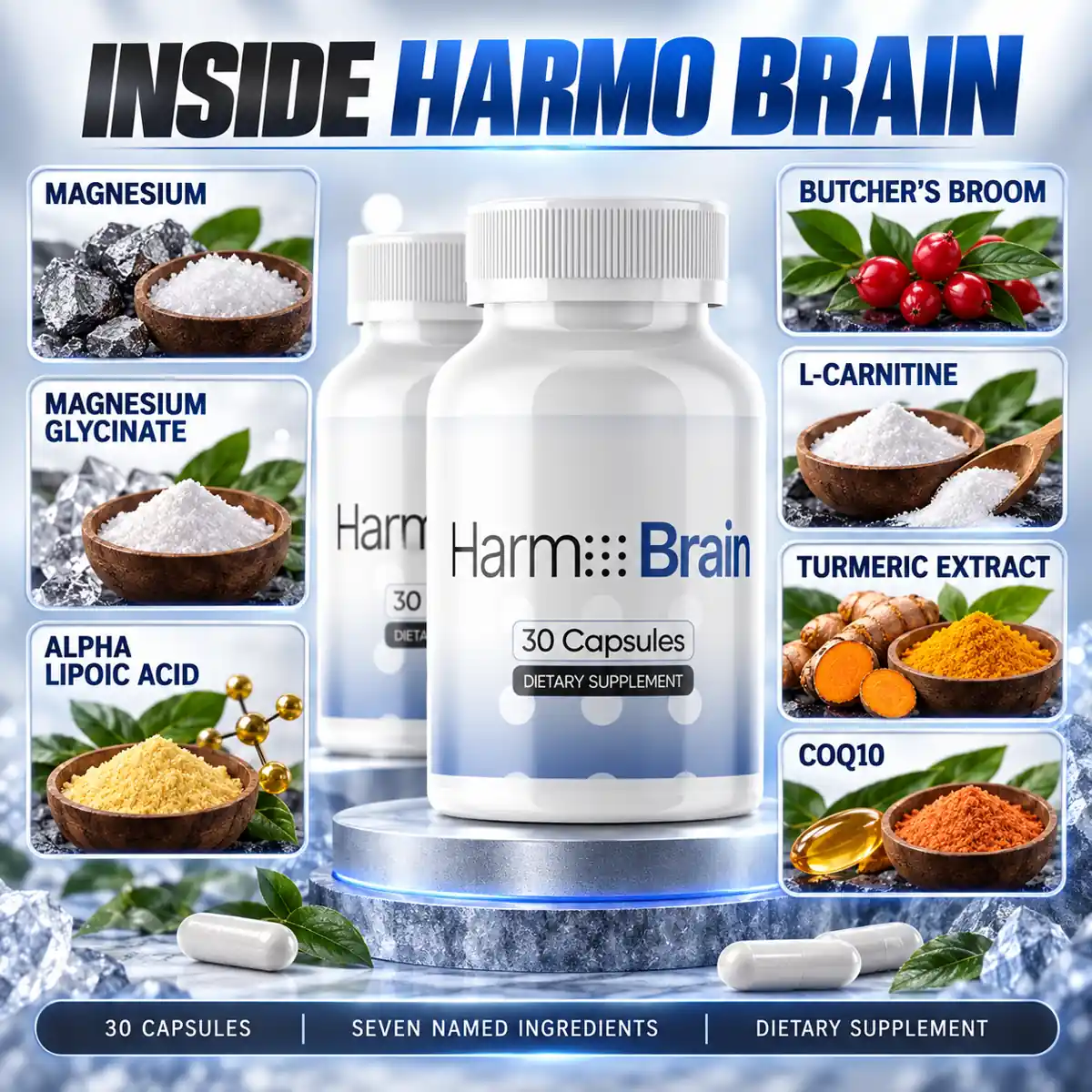
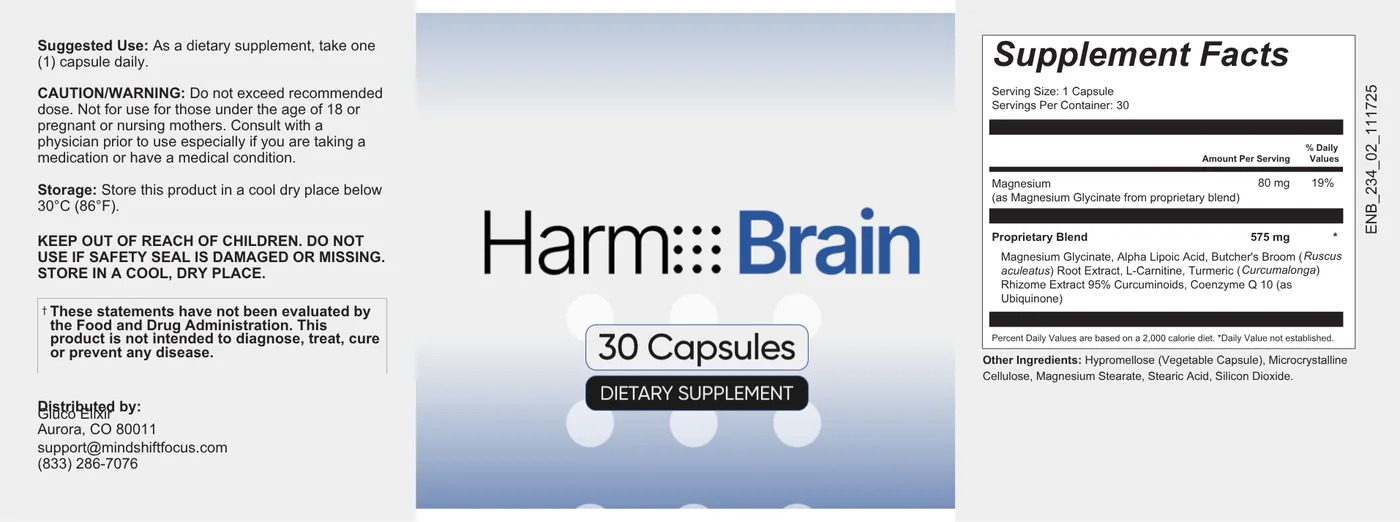
The Harmo Brain panel prints one nutrient with a Daily Value: magnesium, 80 mg, 19%, “as Magnesium Glycinate from proprietary blend”. The magnesium is not a separate powder. It is carried by magnesium glycinate, the first-listed of the six materials in the 575 mg blend and, by the arithmetic further down, much the heaviest.
Glycinate means the magnesium is bound to glycine, the smallest amino acid. The compound is known as a chelate: a mineral held by an organic partner rather than sold as a bare salt.
The 19% is simple division. Supplement labels use a Daily Value of 420 mg for magnesium, and 80 divided by 420 is 0.19. It is a labelling yardstick, the same on every bottle, which is what makes it useful for comparing products.
80 mg against the numbers that matter
Four reference figures from NIH ODS and the label itself put 80 mg in context. The Daily Value is a labelling yardstick. The allowances are what nearly all healthy adults need from every source combined. The upper limit applies to supplements and medicines only, not to food.
| Reference | Amount | 80 mg as a share |
|---|---|---|
| Daily Value on supplement labels | 420 mg | 19% |
| Adult allowance, top of the range | 420 mg a day | 19% |
| Adult allowance, bottom of the range | 310 mg a day | 26% |
| Adult upper limit, from supplements | 350 mg a day | 23% |
Allowances cover food and supplements together. The upper limit covers supplements and medicines, not magnesium in food.
So one capsule supplies about a fifth to a quarter of an adult’s daily allowance, and under a quarter of the supplement limit. It is a moderate, everyday amount, not a high-dose product.
What magnesium does in the body
According to NIH ODS, magnesium is a cofactor in more than 300 enzyme systems, including those behind protein synthesis, muscle and nerve function, blood glucose control and blood pressure regulation. It is needed for energy production, and it is part of bone.
The same fact sheet notes that many people in the United States take in less magnesium than recommended. Good food sources are green leafy vegetables, legumes, nuts, seeds and whole grains, so a capsule sits on top of a diet, not in place of one.
Harmo Brain, on the official website
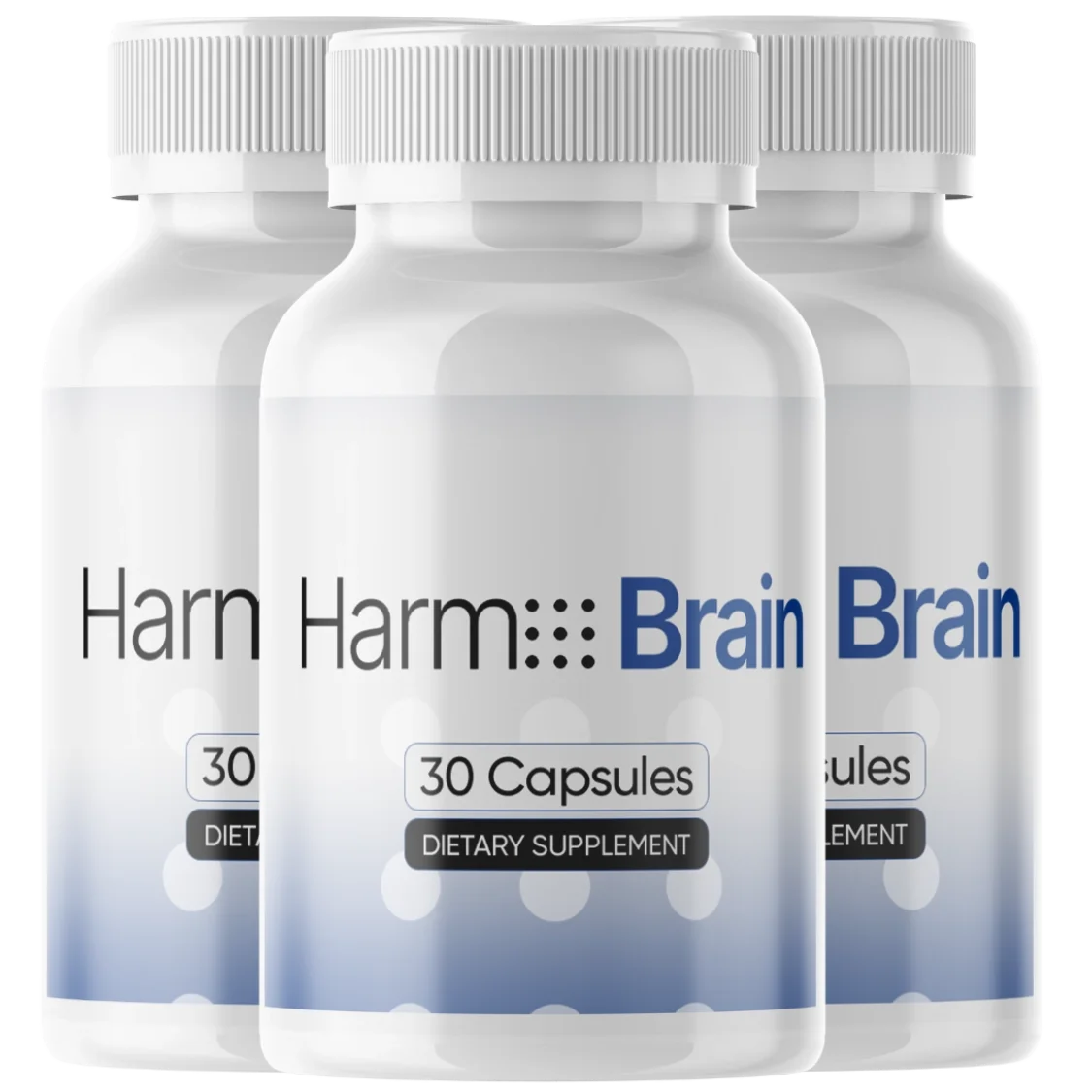
One capsule a day, 30 to a bottle: 80 mg of magnesium as glycinate inside a 575 mg blend of six named materials. Packs of 2, 3 or 6 are priced at checkout, with 60 days from purchase to change your mind.
Order Harmo BrainWhat research says about magnesium and cognition
The honest answer is: not much yet. A 2024 systematic review and meta-analysis of magnesium and cognitive health in adults (Chen 2024) found three randomised trials and twelve cohort studies. The trials were too few to draw conclusions about magnesium supplements.
The cohort studies were more interesting. Blood magnesium showed a U-shaped relationship with dementia and cognitive impairment: risk was higher below the normal range and higher again above it, with the lowest risk around 0.85 mmol/L. That is an argument for adequate intake, not for large doses, and the authors called for more trials.
That is why this desk describes Harmo Brain as made to support focus and mental clarity, and never as a magnesium treatment for memory. The magnesium in it is a declared, moderate, everyday amount of an essential mineral.
Why glycinate, and what it does not prove
Glycinate is one of several forms magnesium is sold in, alongside oxide, citrate and others. PubChem lists it at 172.42 g/mol, which makes it about 14.1% magnesium by weight: bulkier than oxide for the same magnesium, which is why it fills so much of this blend.
Comparisons between forms exist, but read them with their population. One small 1994 study compared magnesium diglycinate with magnesium oxide in patients with ileal resection, people whose gut absorbs poorly after surgery (Schuette 1994). A study like that says something about the chemistry of the form and very little about a healthy adult taking one capsule a day.
How much magnesium the body keeps from food
Food is still the main source. NIH ODS puts the share of magnesium absorbed from food and drink at roughly 30% to 40%, and lists green leafy vegetables, legumes, nuts, seeds and whole grains as good sources, with some breakfast cereals fortified.
The same fact sheet notes something easy to miss: people who take a magnesium-containing supplement tend to get more magnesium from their food as well. A capsule is most useful as a steady addition to a decent diet, not as a patch over a poor one.
Who is most likely to fall short
According to NIH ODS, many people in the United States take in less magnesium than recommended, and men aged 71 and over and teenagers are the groups most likely to fall short. Some medicines, including diuretics and proton pump inhibitors, can also affect magnesium status.
Harmo Brain is for adults 18 and over, so teenagers are outside its label. For an older adult, or anyone on a diuretic or an acid-reducing medicine, the useful step is a conversation about magnesium status with whoever prescribes, rather than a guess.
Adding it up with food, supplements and medicines
Because the upper limit covers supplements, the practical question for many buyers is what else they already take. A multivitamin, a separate magnesium supplement or a magnesium-based antacid all count towards the same 350 mg.
- Add every supplement and medicine that lists magnesium, then add 80 mg.
- Stay at or under 350 mg a day from those sources unless a clinician has said otherwise.
- Know the signs of too much: ODS lists diarrhoea, nausea and abdominal cramping from high supplemental doses, and warns that very high doses can cause magnesium toxicity. One capsule a day is nowhere near that.
- Magnesium can bind oral bisphosphonates and tetracycline or quinolone antibiotics; ask whoever prescribed them about timing.
The side effects and safety page lists every ingredient-level interaction in Harmo Brain, with its source, and NCCIH advises telling every prescriber about any supplement you take.
Three questions buyers ask about the 80 mg
Is 80 mg enough to matter?
It is about a fifth of an adult’s daily allowance. For someone whose diet already covers the allowance it is a top-up; for someone below it, it narrows the gap. Neither turns it into a treatment.
Can I take it with a multivitamin?
Usually, yes. Check the multivitamin’s magnesium line, add 80 mg, and keep the total from supplements and medicines at or under 350 mg a day.
Does the time of day matter?
The label sets one capsule daily and no particular hour. Consistency matters more than the clock: the same time each day, tied to a meal or a morning habit, is the easiest way to keep a routine going for the weeks it needs.
Why not a bigger dose?
Larger supplemental doses raise the chance of loose stools and cramping, and the label sets one capsule a day. A moderate daily amount taken for weeks is the pattern the label is built around.
What 80 mg is, and what it is not
It is a declared amount you can check on the bottle, a moderate share of the daily allowance, and comfortably inside the supplement limit. It is not a treatment for a deficiency, which is a matter for a clinician and a blood test, and it is not proof that Harmo Brain will change how focused anyone feels.
What it gives a buyer is certainty about one line of the label. Most of this desk’s buyers who report a change put it at three to six weeks, so plan a trial that long; the pricing page shows which packs cover it.
A note on what this is. Harmo Brain is a dietary supplement, not a medicine. Nothing in this article describes it as a treatment for dementia, Alzheimer’s disease, mild cognitive impairment or any other condition, and no vitamin or supplement is recommended for preventing cognitive decline. A change in memory or thinking that worries you is a reason to be assessed by a clinician, not a reason to start a capsule.
Sources cited in this article
- NIH Office of Dietary Supplements. Magnesium: Fact Sheet for Health Professionals. Updated January 6, 2026. ods.od.nih.gov
- Chen F, Wang J, Cheng Y, et al. Magnesium and Cognitive Health in Adults: A Systematic Review and Meta-Analysis. Adv Nutr. 2024;15(8):100272. PMID 39009081. pubmed.ncbi.nlm.nih.gov
- Schuette SA, Lashner BA, Janghorbani M. Bioavailability of magnesium diglycinate vs magnesium oxide in patients with ileal resection. JPEN J Parenter Enteral Nutr. 1994;18(5):430-5. PMID 7815675. pubmed.ncbi.nlm.nih.gov
- National Library of Medicine. PubChem Compound Summary: Magnesium Glycinate (CID 84645), C4H8MgN2O4, molecular weight 172.42 g/mol. pubchem.ncbi.nlm.nih.gov
- National Center for Complementary and Integrative Health. Using Dietary Supplements Wisely. www.nccih.nih.gov
More about Harmo Brain
Order Harmo Brain on the official website
One capsule a day, 30 to a bottle: 80 mg of magnesium as glycinate inside a 575 mg blend of six named materials. Packs of 2, 3 or 6 are priced at checkout, with 60 days from purchase to change your mind.
Packs of 2, 3 or 6 bottles, priced at checkout · 60 days from purchase to change your mind
One capsule a day · 30 per bottle · lot HAR-26/HA-4569