L-Carnitine or Acetyl-L-Carnitine: Why the Form on the Label Matters
Two supplements can print nearly the same word and mean different molecules. The carnitine in Harmo Brain is a clear example, and it is worth two minutes before reading any claim about carnitine and memory.
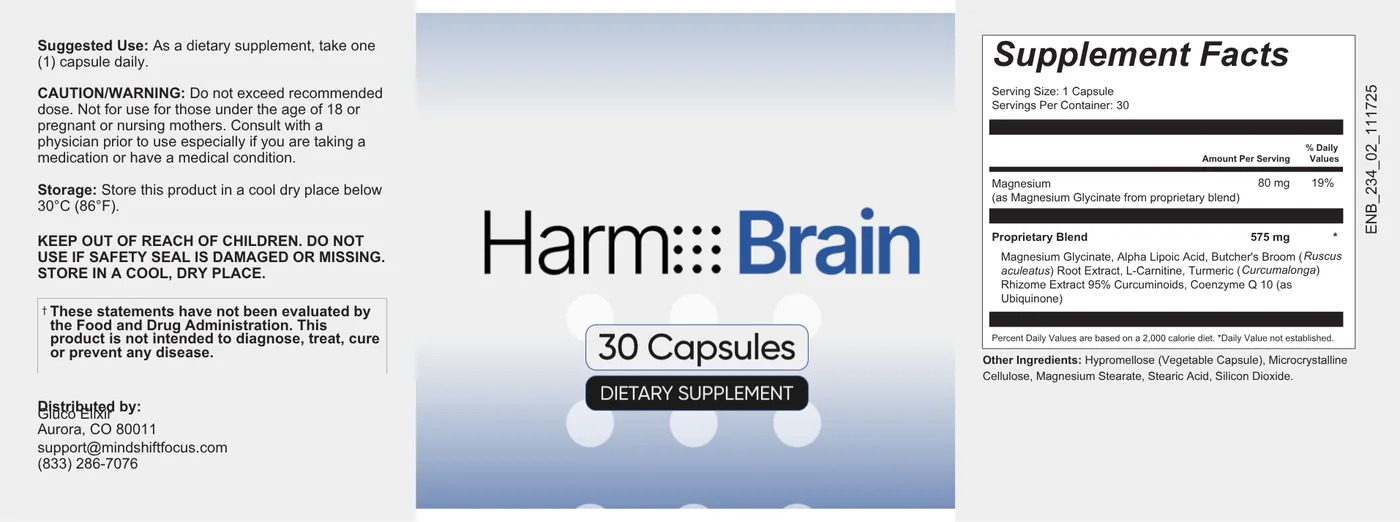
- The label says L-carnitine. It is fourth of six in the 575 mg blend.
- The memory trials used acetyl-L-carnitine. At 1.5 to 3.0 g a day, in adults already diagnosed with mild cognitive impairment or mild Alzheimer’s disease.
- Your body makes carnitine. NIH ODS says healthy adults make enough without food or supplements.
- Read the form first. Then look for research on that form, in people like you.
- Grams, not milligrams. Carnitine research, and its side effects, sit at grams a day, far beyond any share of a 575 mg blend.
What the label says
The Harmo Brain panel lists “L-Carnitine” fourth of the six materials in its 575 mg proprietary blend, after magnesium glycinate, alpha lipoic acid and butcher’s broom root extract, and before turmeric extract and CoQ10. No separate amount is printed for it.
The pack describes the formula as mitochondrial and circulatory, and L-carnitine belongs to the mitochondrial half, alongside alpha lipoic acid and coenzyme Q10.
Two molecules, one family
Carnitine is a family name. NIH ODS uses it for several compounds, including L-carnitine, acetyl-L-carnitine and propionyl-L-carnitine, and names the first two as the main forms sold in supplements. The body makes carnitine in the liver, kidneys and brain from two amino acids, lysine and methionine, and uses it to carry long-chain fatty acids into mitochondria to be burned for energy.
Acetyl-L-carnitine is L-carnitine with an acetyl group attached. That small change is why researchers interested in the brain have studied it separately, and why its results cannot simply be borrowed for plain L-carnitine.
NIH ODS also describes where carnitine sits in the body: about 95% of it is stored in heart and skeletal muscle, most of the rest in the liver and kidneys, and only about 0.5% circulates in the blood. Any excess in the blood is passed in urine.
| L-carnitine | Acetyl-L-carnitine | |
|---|---|---|
| On the Harmo Brain label | Yes, fourth in the blend | No |
| Main form in supplements | Yes | Yes |
| Studied for memory | Mainly studied for other uses | Yes, in diagnosed populations |
| Doses in the memory trials | Not applicable | 1.5 to 3.0 g a day |
| Absorption data | Dietary carnitine: about 63% to 75% | Not well studied, per NIH ODS |
Both forms are carnitine. They are not interchangeable in the research.
What the memory research actually studied
The best-known result is a 2003 meta-analysis of 21 trials (Montgomery 2003). In it, 1,204 adults with mild cognitive impairment or mild Alzheimer’s disease took 1.5 to 3.0 g of acetyl-L-carnitine a day, or placebo, for three to twelve months. NIH ODS reports that assessment scores were better with the supplement in that analysis, that a Cochrane review of overlapping trials reached somewhat different findings, and that the effect in dementia remains unclear.
The Cochrane review covered 15 trials, 13 of them also in the meta-analysis, at 1 to 3 g a day for 12 to 52 weeks in people with mild to moderate dementia or cognitive decline. Two careful readings of largely the same trials did not fully agree, which is itself worth knowing before reading a confident claim about carnitine and memory.
Three things separate that research from a daily focus capsule: the form (acetyl-L-carnitine), the dose (grams, not a share of 575 mg) and the people (already diagnosed). Whatever those trials found belongs to that form, that dose and that group.
The rat study that pairs carnitine with lipoic acid
One reason carnitine and lipoic acid appear together in formulas like this is a line of animal research. A 2002 study fed acetyl-L-carnitine and lipoic acid to old rats and reported better metabolic function with less oxidative stress (Hagen 2002).
The details show how far that is from a capsule. The rats got acetyl-L-carnitine as 1.5% of their drinking water and lipoic acid as 0.5% of their food, for up to a month. Old rats given both became more active, and markers of oxidative stress in their liver cells fell towards those of young rats; the pair did more than either compound alone.
It is interesting biology and it is the reason the pairing is familiar. It is also a study in old rats, with the acetylated form, at dietary percentages, and it says nothing about how a person will feel on one capsule a day.
Harmo Brain, on the official website
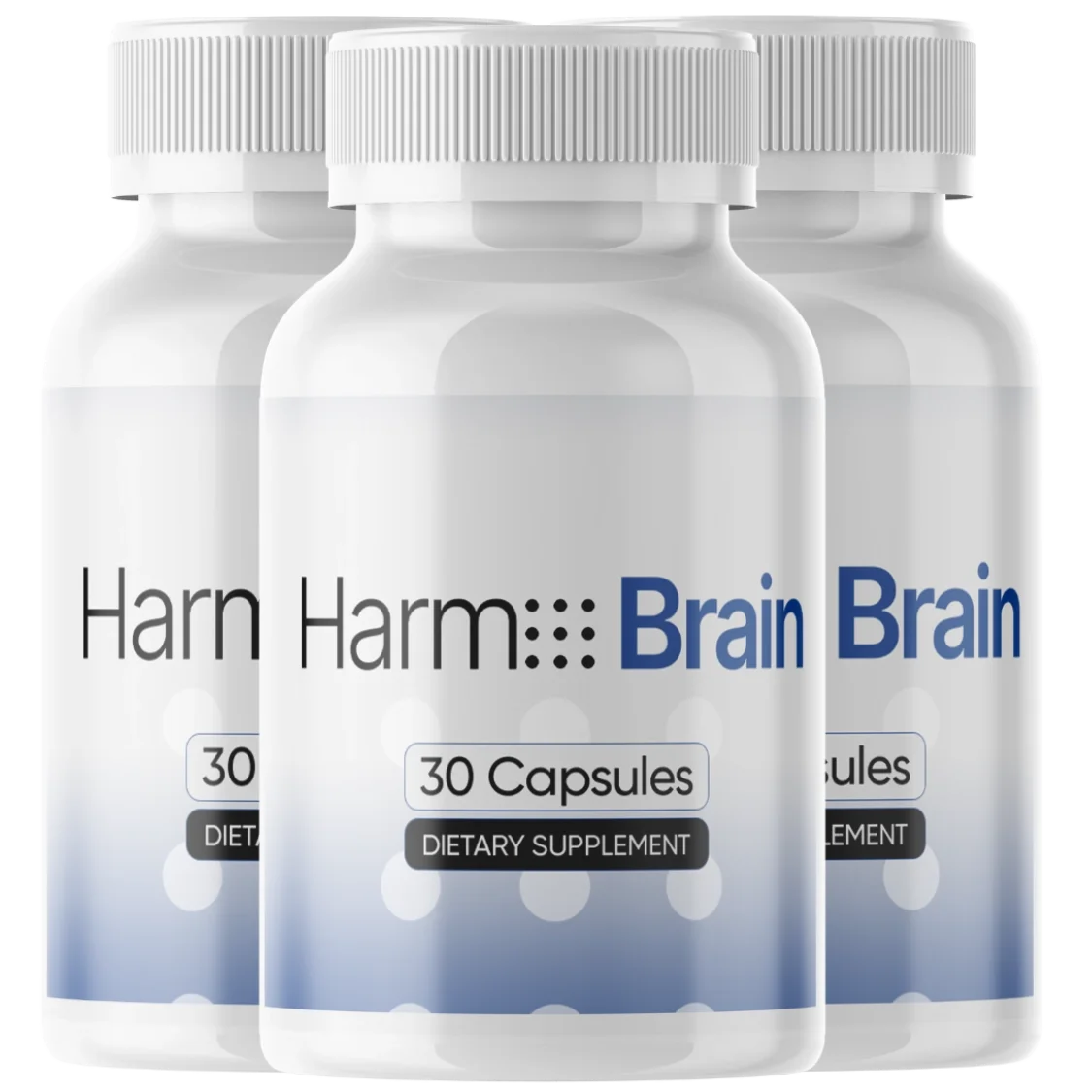
One capsule a day, 30 to a bottle: 80 mg of magnesium as glycinate inside a 575 mg blend of six named materials. Packs of 2, 3 or 6 are priced at checkout, with 60 days from purchase to change your mind.
Order Harmo BrainWhat L-carnitine itself has been studied for
Plain L-carnitine has its own literature. A 2024 systematic review gathered the studies of L-carnitine in psychiatric and neurological conditions (Wang 2024): again, people with a diagnosis. Elsewhere, NIH ODS summarises L-carnitine trials in areas such as insulin resistance and exercise, mostly at doses measured in grams a day. Not every result is flattering: in one 2022 trial it reports, 157 people aged 58 to 75 with metabolic syndrome who took 1 g twice a day for six months ended with higher total and LDL cholesterol than those on placebo.
NIH ODS is also clear on the baseline: healthy children and adults do not need carnitine from food or supplements, because the liver and kidneys make enough, and in 1989 the Food and Nutrition Board concluded it is not an essential nutrient. Red meat is the richest food source; poultry, fish and dairy supply some.
How much carnitine the body makes
NIH ODS gives a figure that puts any supplement in proportion: a 165 lb adult on a strict vegetarian diet, eating almost no carnitine, still makes about 14.4 mg a day. That internal supply is not switched off by eating carnitine, and it is enough for healthy people.
So carnitine in a daily capsule is not filling a gap the way a vitamin can. Its place in a formula like this one is as a partner to the other mitochondrial ingredients, which is how the supplier frames it.
Carnitine on the plate
NIH ODS names animal foods as the source of dietary carnitine, red meat above all, with poultry, fish and dairy supplying some. Vegetables, fruit and grains provide negligible amounts, which is why vegetarians rely almost entirely on the body’s own production, and why that production is enough for them.
For a buyer the practical point is simple: carnitine in a supplement is an addition to what the body already makes and what the diet already brings, not a nutrient most people are short of.
The range on the shelf
Carnitine supplements vary enormously. NIH ODS reports products carrying from about 3 mg to 5,000 mg, mostly as L-carnitine or acetyl-L-carnitine. The body absorbs about 63% to 75% of the carnitine in food; how well it absorbs acetyl-L-carnitine has not been well studied.
That range is why the form and the amount deserve equal attention. Two products can both say carnitine and differ more than a thousandfold in dose, and in the molecule itself.
Safety at the amounts that fit
The side effects on record come from doses far above anything this blend can hold. NIH ODS notes that about 3 g a day can cause nausea, vomiting, abdominal cramps, diarrhoea and a fishy body odour. The whole Harmo Brain blend weighs 575 mg. ODS adds that carnitine can cause muscle weakness in people with uraemia and seizures in people with seizure disorders, and both are reasons to ask before starting.
The interaction worth knowing is with blood thinners: a published case letter describes L-carnitine strengthening the effect of acenocoumarol (Martinez 1993). Anyone on an anticoagulant should raise every ingredient in the blend with their prescriber, and the safety page lists them all.
How to read a carnitine line on any label
- Find the exact form: L-carnitine, acetyl-L-carnitine or propionyl-L-carnitine. A label that only says “carnitine” has left out the most useful word.
- Match any research you are shown to that same form.
- Check the population: diagnosed, healthy, or animal.
- Check the dose and the duration against what the label can hold.
- Treat the ingredient as one part of a formula, not as the formula’s evidence.
The same habit works for every material on this label. The focus supplement guide applies it to all six, and the ingredients page sets each research amount beside what the label prints.
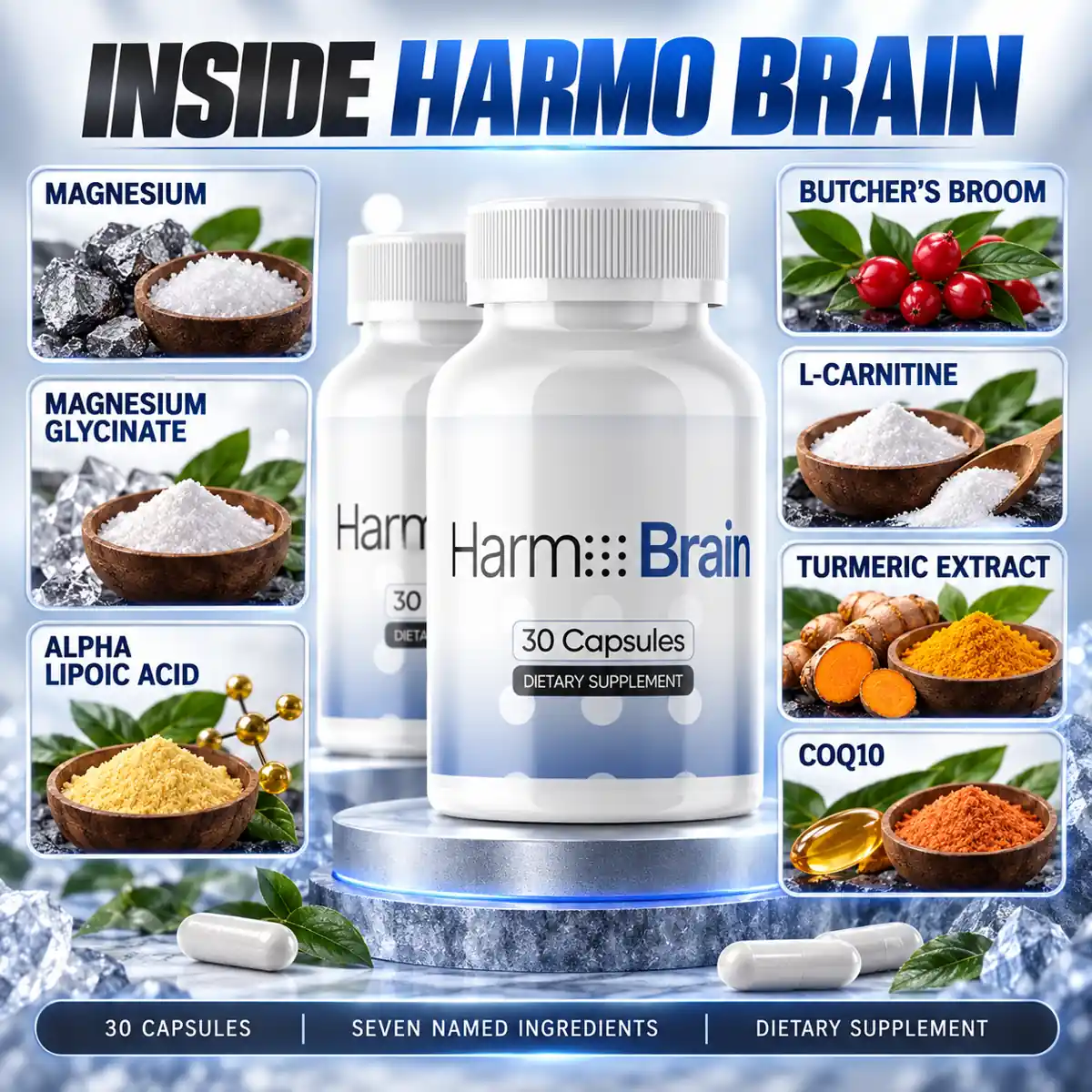
A note on what this is. Harmo Brain is a dietary supplement, not a medicine. Nothing in this article describes it as a treatment for dementia, Alzheimer’s disease, mild cognitive impairment or any other condition, and no vitamin or supplement is recommended for preventing cognitive decline. A change in memory or thinking that worries you is a reason to be assessed by a clinician, not a reason to start a capsule.
Sources cited in this article
- Hagen TM, Liu J, Lykkesfeldt J, et al. Feeding acetyl-L-carnitine and lipoic acid to old rats significantly improves metabolic function while decreasing oxidative stress. Proc Natl Acad Sci U S A. 2002;99(4):1870-5. PMID 11854487. Erratum in: Proc Natl Acad Sci U S A. 2002;99(10):7184. pubmed.ncbi.nlm.nih.gov
- NIH Office of Dietary Supplements. Carnitine: Fact Sheet for Health Professionals. ods.od.nih.gov
- Montgomery SA, Thal LJ, Amrein R. Meta-analysis of double blind randomized controlled clinical trials of acetyl-L-carnitine versus placebo in the treatment of mild cognitive impairment and mild Alzheimer's disease. Int Clin Psychopharmacol. 2003;18(2):61-71. PMID 12598816. pubmed.ncbi.nlm.nih.gov
- Wang W, Pan D, Liu Q, et al. L-Carnitine in the Treatment of Psychiatric and Neurological Manifestations: A Systematic Review. Nutrients. 2024;16(8). PMID 38674921. pubmed.ncbi.nlm.nih.gov
- Martinez E, Domingo P, Roca-Cusachs A. Potentiation of acenocoumarol action by L-carnitine. J Intern Med. 1993;233(1):94. PMID 8429297. pubmed.ncbi.nlm.nih.gov
Order Harmo Brain on the official website
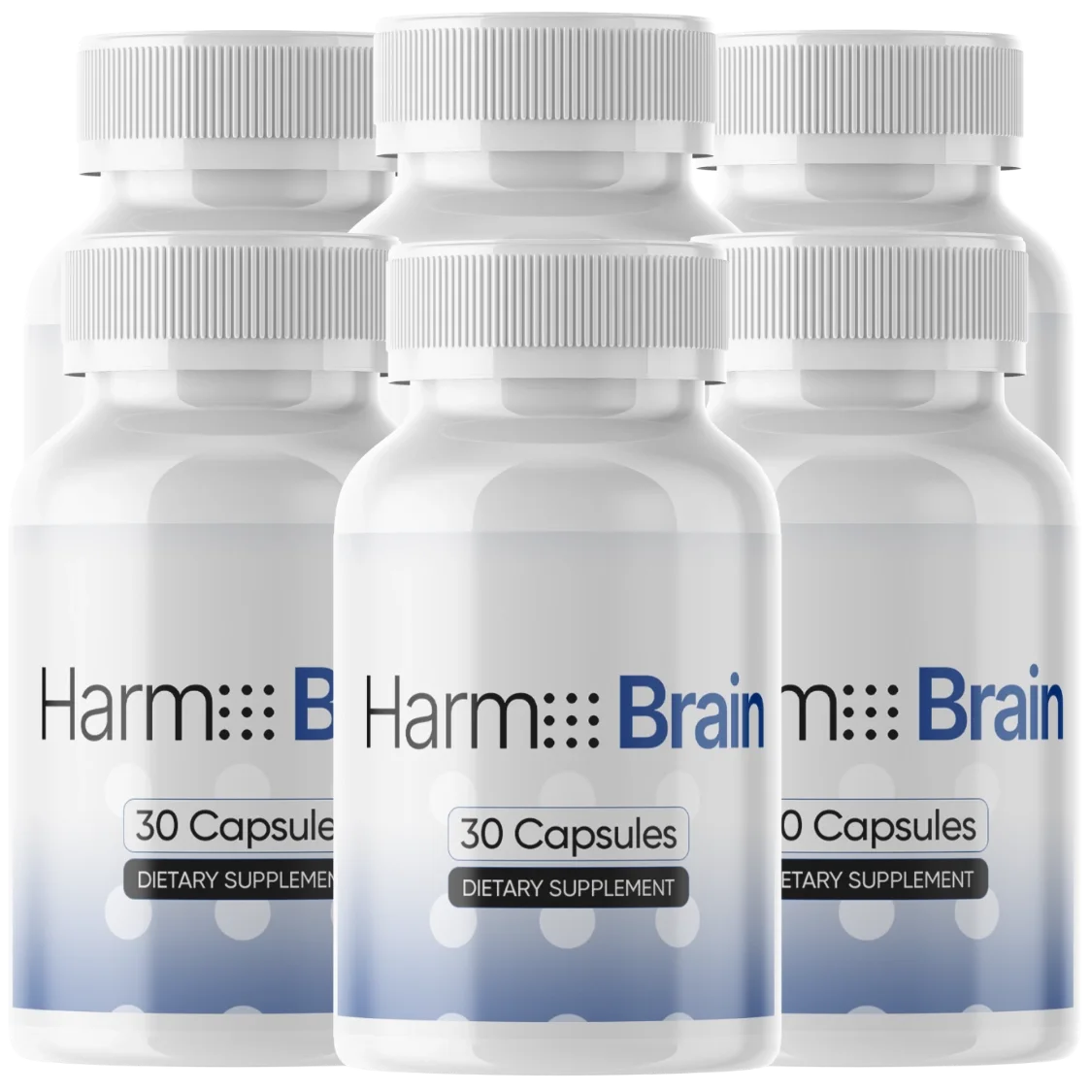
One capsule a day, 30 to a bottle: 80 mg of magnesium as glycinate inside a 575 mg blend of six named materials. Packs of 2, 3 or 6 are priced at checkout, with 60 days from purchase to change your mind.
Packs of 2, 3 or 6 bottles, priced at checkout · 60 days from purchase to change your mind
One capsule a day · 30 per bottle · lot HAR-26/HA-4569